Environmental consultants listed in New York
See all 8 in New York →- 15.0★ (1) · PEng · Certified MBE
Boomi Environmental LLC is an environmental consulting firm specializing in water, wastewater, and stormwater challenges. Established in 2014, it provides environmental planning, design, and project, program, and construction management support services. Sri Rangarajan, PhD, PEng is its President and Principal Consultant.
- 24.7★ (6) · CERTIFIED WBENC & WOSB · CERTIFIED WBE for the SCA
Athenica Environmental Services is an environmental consulting firm located in New York City. Since 1987, it has provided industrial hygiene and hazardous-material services to public and private-sector clients, including environmental site assessments and soil and groundwater remediation oversight.
- 34.4★ (7) · Bowen Hills
ALS provides testing solutions to clients across industries worldwide. Its environmental services include laboratory testing, site assessment and remediation, environmental monitoring, water industry, air monitoring, industrial and occupational hygiene, and PFAS services. ALS began as a geochemistry laboratory in Brisbane in 1976.
- 43.7★ (3) · New York
LiRo-Hill offers environmental services alongside program and construction management, engineering, architecture, survey, and related services. Its network of experts in the Northeast serves public- and private-sector clients, including villages, developers, and major state agencies.
- 5New York
Castleton Environmental Geologic Services, DPC provides environmental consulting, remediation, and risk-management services for real estate developers, brokers, attorneys, lending institutions, and property owners. It is a New York State Professional Services firm licensed to provide geology services, including Phase II Environmental Site Assessments in New York.
Get free quotes from environmental site assessment in New York
Takes about a minute. Free, no obligation; providers reply to you directly.
A client once handed me an environmental report and asked me to “just check if it was any good.” I had no idea what I was looking at. Phase II ESA, RECs, ASTM E1527-21 — it read like a foreign language. The consultant who wrote it had charged $8,500 for the thing, and my client had no way to know if that was robbery or a bargain.
That’s when I started actually learning how this industry works. What I found: hiring an environmental consultant in New York is harder than it should be, and most guides on the topic were clearly written by people who’ve never had to navigate DEC notices or Manhattan permitting timelines.
The Short Version:For most New York property transactions, you need a firm credentialed in ASTM E1527-21 Phase I/II ESAs with specific NYC regulatory experience — not just any national firm with a New York office. Expect case-by-case quotes (no standard pricing exists), prioritize CHMM or PE credentials, and verify the firm knows local DEC and DOB requirements cold.
Key Takeaways
- New York City’s urban density creates a uniquely complex regulatory environment — firms must know both state DEC and city-specific DOB/DEP requirements
- At least 18 environmental companies and startups are active in NYC as of April 2026, so you have real options
- No publicly standardized pricing exists; always get itemized quotes from at least three credentialed firms
- Employee-owned and specialty boutique firms (not just big nationals) often deliver sharper expertise for complex urban sites
What Makes New York Different (And More Complicated)
Here’s what most people miss: hiring an environmental consultant in New York isn’t like hiring one in Phoenix or suburban Ohio. The regulatory stack is genuinely deeper here.
You’re dealing with three overlapping compliance layers — federal EPA standards, New York State DEC requirements, and New York City agency rules (DEP for water/air, DOB for construction-adjacent work). A firm that’s excellent at federal Superfund work can still fumble a routine Phase I in Brooklyn if they don’t know how to read a city landmarks or underground storage tank registry correctly.
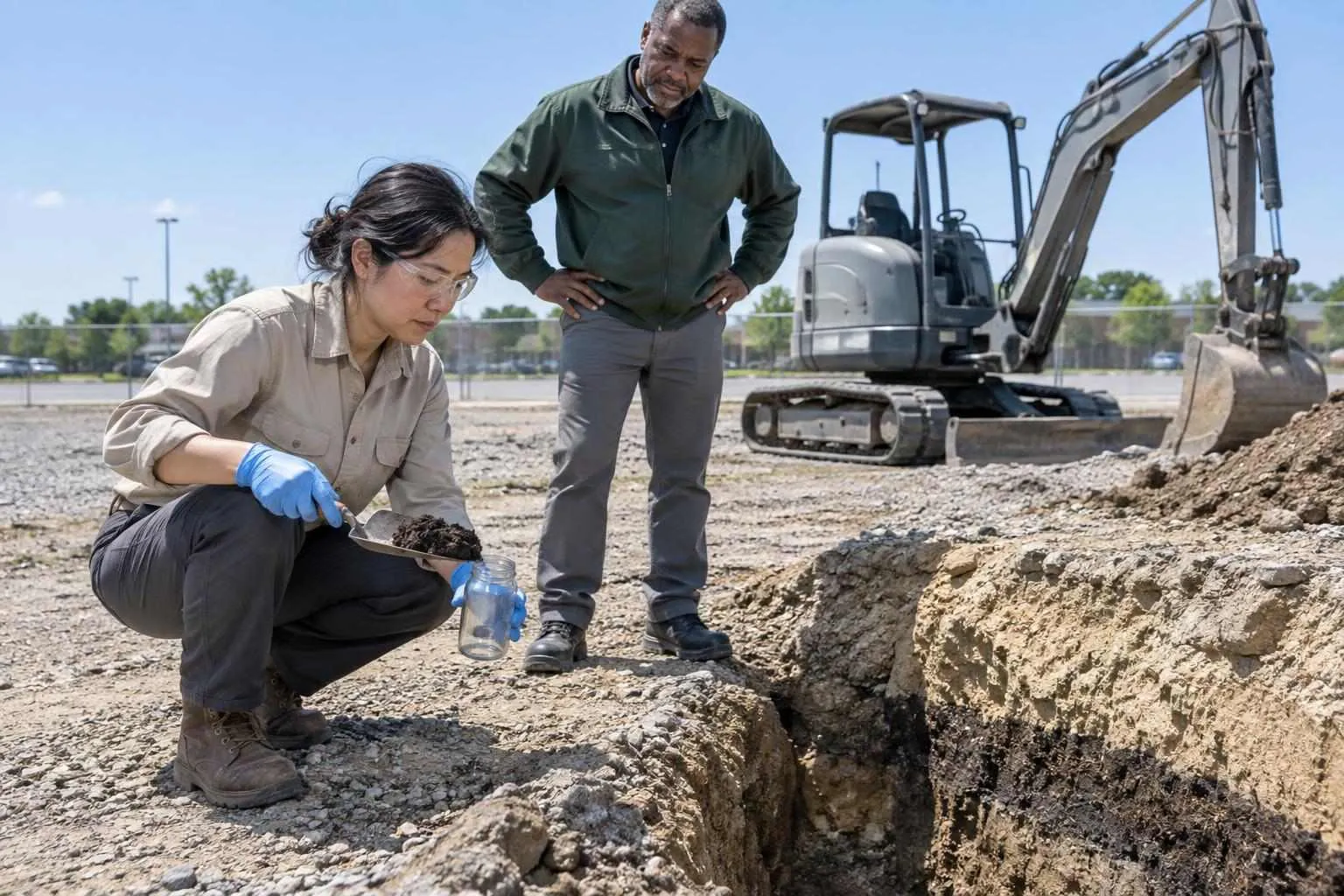
NYC’s urban density compounds everything. Sites are smaller, the chain of title is longer, neighboring properties are closer, and the history of industrial use is denser per square mile than almost anywhere in the country. What reads as a clean parcel in a rural state can have three layers of recognized environmental conditions (RECs) in Bushwick.
Reality Check:National firms aren’t automatically better than regional ones here. A 500-person firm with a Manhattan address is still staffed by individual assessors — and one junior assessor who doesn’t know how to cross-reference NYC DEP records correctly can torpedo your Phase I.
The Firms Worth Knowing
The NYC market has real depth. As of April 2026, at least 18 environmental companies and startups are active in the city, ranging from legacy compliance shops to newer players focused on waste tech and carbon tracking.
For traditional ESA and remediation work, a few names anchor the market:
CORE Environmental Consultants has a strong footprint in both NYC and Western New York, with specialization in hazardous materials consulting and site remediation — the two areas where local regulatory knowledge matters most.
Liberty Environmental covers the NYC corridor alongside Pennsylvania, serving manufacturers, developers, lenders, and governments. Their strength is site assessment and air quality for clients navigating multi-state transactions.
AKRF and ENGIE Impact have established reputations for large-scale New York operations, particularly for infrastructure and energy-adjacent environmental work.
On the sustainability and innovation side, firms like Recycle Track Systems and Chestnut Carbon represent a newer wave of NYC environmental consultants focused on waste tracking and carbon markets — relevant if your project involves ESG reporting or voluntary carbon commitments alongside traditional compliance.
How to Actually Compare Firms
No standard pricing exists in this market. The 50Pros platform vetted nine NYC sustainability firms as of April 2026 and explicitly noted “transparent pricing” as a differentiator — because most firms still don’t publish rates. That tells you everything.
Here’s how to run a real comparison:
| Factor | Why It Matters | What to Ask |
|---|---|---|
| Credentials (CHMM, PE, PG, REP) | Credentialed signatory required for lender-accepted ESAs | ”Who signs the report?” |
| NYC-specific track record | Local regulatory knowledge isn’t transferable | ”How many Phase IIs in [borough] in the past 2 years?” |
| Lab relationships | Turnaround time on soil/groundwater samples affects your timeline | ”Which labs do you use and what’s the typical TAT?” |
| Scope clarity | Vague scopes become cost overruns | ”Is the Phase II quote fixed-fee or T&M?” |
| DEC/DOB familiarity | Determines report acceptance speed | ”Have you worked with DEC Region 2 on voluntary cleanup?” |
Pro Tip:Ask for a sample Phase I from a comparable NYC site type. A firm that’s done 200 ESAs in suburban New Jersey and three in Manhattan is not a Manhattan firm — regardless of what their website says.
The Hiring Process, Compressed
For commercial real estate transactions, the typical sequence is: Phase I ESA (2–3 weeks) → if RECs identified, Phase II (additional 4–8 weeks for sampling and lab results) → remediation recommendation if warranted.
Lenders under SBA or CMBS programs require ASTM E1527-21 compliance. If your report isn’t stamped by a credentialed EP (Environmental Professional) and doesn’t explicitly reference the 2021 standard, your lender will kick it back.
Timeline is where NYC gets expensive. Not in fees — in delays. A Phase II requiring DEP permits for subsurface drilling in certain zones can add weeks. If you’re in a 1031 exchange or under a hard close deadline, you need a firm that’s done this specific dance before.
Don’t optimize purely for price. A $500 discount on the Phase I that produces a report your lender won’t accept costs you the deal.
Practical Bottom Line
If you’re hiring an environmental consultant in New York for a commercial transaction, start here:
- Browse the New York directory to filter by service type and verified credentials — it’ll save you the cold-call phase
- Get quotes from at least three firms; ask each for a fixed-fee scope, not T&M
- Confirm the signing EP holds current CHMM or PE credentials
- Ask directly about their experience with your specific borough or site type
- Verify they know ASTM E1527-21 — not just by name, but by describing how they handle data gaps
For a broader framework on what environmental consultants actually do — what’s in a Phase I, how to read an REC, when Phase II is mandatory — the Complete Guide to Environmental Consultants is where to start before you talk to anyone.
New York has the depth of market to find an excellent firm. The challenge is knowing how to tell them apart before the report lands on your desk.
Done reading? Get quotes from environmental consultants in New York.
Takes about a minute. Free, no obligation; providers reply to you directly.
Popular cities:
Nick built this directory to help developers and lenders find credentialed environmental consultants without wading through firms that also perform remediation — a conflict of interest he encountered firsthand while navigating due diligence on a commercial acquisition.